
A Comprehensive Analysis of the Low Temperature Properties of Stainless Steel: Comparison of Austenite, Ferrite, and Martensite
Time : 2026-01-12
A Comprehensive Analysis of the Low Temperature Properties of Stainless Steel: Comparison of Austenite, Ferrite, and Martensite

I. Key Metrics & Mechanisms for Low-Temperature Performance

The primary challenge in low-temperature environments is "Low-Temperature Embrittlement"—a transition from ductile to brittle behavior.

  • Key Metrics:

    1. Ductile-to-Brittle Transition Temperature (DBTT): The temperature at which impact toughness drops precipitously. A lower DBTT indicates superior low-temperature performance.

    2. Low-Temperature Impact Energy: Charpy V-notch impact energy at a specified low temperature (e.g., -196°C), directly measuring resistance to brittle fracture.

  • Core Mechanism:

    • At low temperatures, dislocation movement is hindered, reducing plastic deformation capability.

    • For Body-Centered Cubic (BCC) structures (e.g., ferritic, martensitic), yield strength increases sharply as temperature decreases, leading to sudden, brittle cleavage fracture when it reaches the cleavage fracture stress.

    • For Face-Centered Cubic (FCC) structures (e.g., austenitic), yield strength is relatively insensitive to temperature, and this transition does not occur, resulting in outstanding low-temperature toughness.

86b27b3ba057b33acb63304d3010b4ae


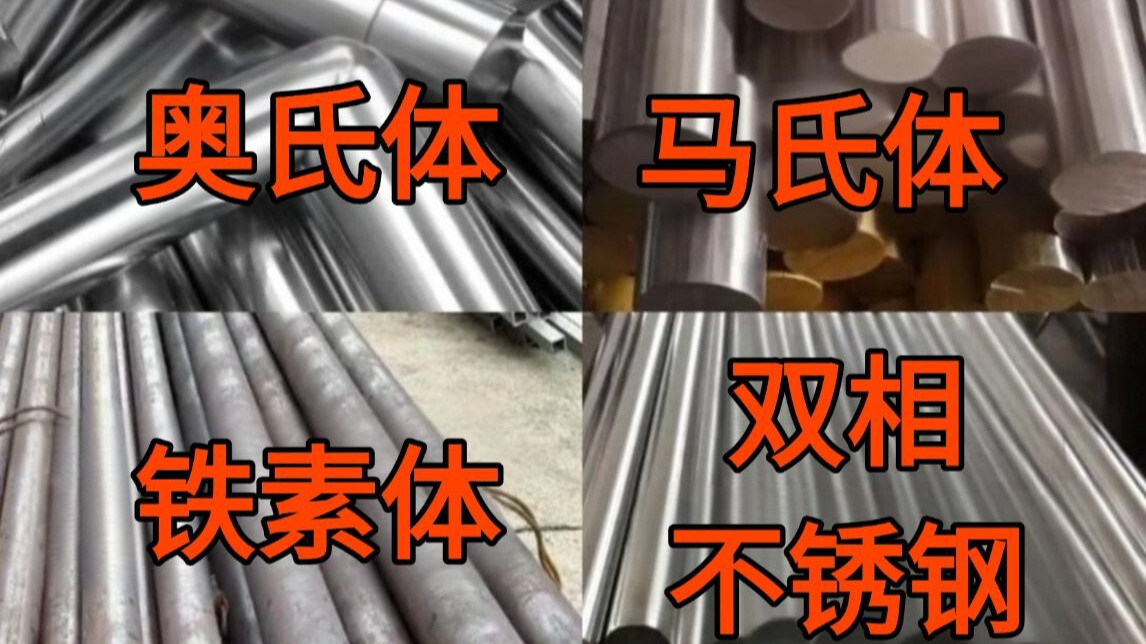
II. In-Depth Comparison of the Three Main Stainless Steel Classes

Characteristic

Austenitic Stainless Steels(AISI 304, 316, 304L, 316L, etc.)

Ferritic Stainless Steels(AISI 430, 409, 444, etc.)

Martensitic Stainless Steels(AISI 410, 420, 440C, etc.)

Crystal Structure

Face-Centered Cubic (FCC)

Body-Centered Cubic (BCC)

Body-Centered Cubic/Tetragonal (BCC/BCT)

Key Alloying Elements

High Nickel (Ni), Chromium (Cr), Low Carbon (e.g., L-grades)

Primarily Chromium (Cr), essentially Nickel-free

Chromium (Cr) with high Carbon (C), may contain small amounts of Nickel

Low-Toughness Mechanism

FCC structure has no ductile-brittle transition. Nickel (Ni) further stabilizes the austenite phase and lowers the stacking fault energy, promoting twinning deformation and significantly enhancing low-T toughness.

BCC structure exhibits a pronounced ductile-brittle transition. DBTT typically lies between 0°C and above room temperature. Coarser grains raise the DBTT.

BCC/BCT structure, highest DBTT. High-carbon martensite is inherently very hard and brittle, with a DBTT far above room temperature.

Typical Low-Temp Performance

Excellent.• DBTT: Below -196°C (liquid nitrogen) and even -269°C (liquid helium).• Impact Energy @ -196°C: Usually well above 100 J.

Poor.• DBTT: Between 0°C and +50°C, depending on specific composition and grain size.
• High risk of brittle fracture below 0°C.

Very Poor / Not Applicable.• DBTT: Far above room temperature.• Exhibits brittle behavior even at room temperature. Strictly prohibited for cryogenic use.

Key Factors Affecting Performance

1. Nickel Content: Higher Ni improves low-T toughness (e.g., 304 > 201).
2. Carbon Content: Lower is better (L-grades) to prevent carbide precipitation.
3. Austenite Stability: Must prevent strain-induced or low-T martensite transformation (relevant for some high-strength grades).

1. Grain Size: Finer grains lower DBTT. However, welding ferritic steels often causes coarse grains in the Heat-Affected Zone (HAZ), initiating brittle cracks.
2. Interstitial Elements: Impurities like C and N drastically increase DBTT.

1. Carbon Content: Carbon is the primary strengthening element but also the main cause of brittleness. Higher carbon = more brittle.
2. Tempering Process: Even after high-temperature tempering ("quench and temper"), the DBTT remains far above room temperature, unsuitable for low-T service.

Typical Cryogenic Applications

LNG storage tanks & piping, liquid nitrogen/oxygen/helium vessels, cryogenic lab equipment, aerospace cryo-fuel tanks, superconducting magnet structures.

Generally NOT used for load-bearing or impact applications at low temperatures. Possibly for non-structural, non-pressurized parts like decorative trim or housings (high risk, not recommended).

Prohibited for any cryogenic environment. Used for tools, bearings, structural components at ambient temperatures.


III. Specialized Low-Temperature Steels & Material Selection Guidelines

  1. Specialized High-Alloy Austenitic Grades:

    • 304L / 316L are the most versatile cryogenic stainless steels.

    • Higher-Performance Grades: e.g., S30409 (304H), S31609 (316H), and High-Manganese Austenitic Steels (e.g., 21-6-9, using Mn and N to partially replace Ni) for extreme low temperatures or special environments.

  2. Duplex Stainless Steels (Austenitic + Ferritic):

    • Although offering high strength and corrosion resistance, their low-temperature toughness is significantly inferior to fully austenitic steels due to the ~50% ferritic (BCC) phase. They are generally not used for deep cryogenic (< -50°C) critical pressure components.

  3. Core Selection Principles:

    • Primary Rule: Austenitic stainless steel MUST be selected.

    • Prefer "L-Grades" (e.g., 304L, 316L): Ultra-low carbon maximizes resistance to carbide precipitation during welding/service, ensuring weld toughness.

    • Consider Nickel Content: For extreme cryogenics (< -196°C) or high-safety applications, select grades with ≥9% Ni (e.g., 304, 316) for stable austenite.

    • Strictly Avoid Ferritic & Martensitic Grades: Material specifications must be explicitly defined and verified during design, procurement, and maintenance of cryogenic equipment to prevent misuse.

RECENT NEWS

Online Message

Submit