
News
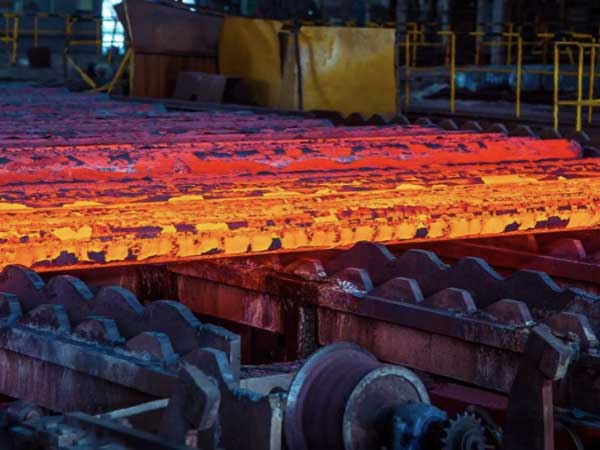
I. Analysis of the Sensitization Phenomenon
1. Core Definition
Sensitization occurs when austenitic stainless steels are held within or slowly cooled through a critical mid-temperature range (approx. 450°C - 850°C). During this process, chromium (Cr) combines with carbon (C) to form chromium carbides (primarily Cr₂₃C₆) that precipitate along grain boundaries.
2. The Fundamental Consequence: Intergranular Corrosion
Theory of Chromium Depletion: Since chromium diffuses much slower than carbon, its rapid depletion at the grain boundaries is not replenished from the grain interiors. This creates a chromium-depleted zone around the boundaries where Cr content falls below the 12% threshold required for stable passivation.
Corrosion Mechanism: In a corrosive environment (especially acids or chlorides), the low-chromium zone becomes electrochemically active (anodic) compared to the grain interiors (cathodic), leading to preferential corrosion along the grain boundaries.
Catastrophic Result: The material may appear intact, but the grain boundaries are severely weakened, causing a sudden, brittle fracture without visible warning. This is depicted as:
[Grain] | [Corroded Boundary] | [Grain] → Complete brittle failure.
3. Triggering Conditions
Critical Temperature Range: 550°C - 750°C is the most potent range.
Time Exposure: The longer the exposure within this range, the more extensive the carbide precipitation and sensitization.
Common Scenarios:
Welding: The Heat-Affected Zone (HAZ) adjacent to the weld, which experiences this temperature range, is the most common site for weld sensitization.
Heat Treatment: During annealing or stress relieving if cooling through the sensitization range is too slow.
Long-Term High-Temperature Service: Equipment operating for extended periods within the sensitization temperature range.
II. Core Prevention and Mitigation Methods
The central principle is to "prevent chromium carbide precipitation at grain boundaries" or "eliminate the chromium-depleted zone."
1. Material Selection (The Most Fundamental Solution)
This is the most effective and reliable strategy.
Use Low-Carbon or "L-Grade" Stainless Steels:
Grades: 304L, 316L (C ≤ 0.03% max).
Principle: The extremely low carbon content drastically reduces the amount of carbon available to form chromium carbides, effectively preventing sensitization. This is the first choice for welded fabrications.
Use Stabilized Stainless Steels:
Grades: 321 (stabilized with Titanium, Ti), 347 (stabilized with Niobium, Nb).
Principle: Ti or Nb have a much stronger affinity for carbon than chromium. They form stable carbides (TiC, NbC) first, effectively "tying up" the carbon and protecting the chromium from depletion. Ideal for components intended for long-term service in the sensitization temperature range.
2. Process Control (Critical Operational Measures)
Welding Process:
Use matching low-carbon (L-grade) or stabilized filler metals.
Control Heat Input: Use lower current, faster travel speeds to minimize time in the critical temperature range.
Employ back-purge shielding gas (e.g., argon) to protect the weld root.
Heat Treatment:
Solution Annealing (Quenching): For already sensitized components, heat to 1050°C - 1150°C to dissolve all chromium carbides back into the austenite matrix, followed by rapid quenching (water) to "freeze" the homogeneous structure. This is the most effective restorative heat treatment.
Avoid Slow Cooling Through Sensitization Range: Ensure rapid cooling through the 450°C-850°C window during any heat treatment.
3. Design and Operational Management
Minimize stress concentrations at welds in corrosive environments.
Control process environments to avoid highly oxidizing acids where possible.
III. Summary & Quick Selection Guide
RECENT NEWS
Online Message